Whistle Wake-Ups: Referee Tendencies Shaping EPL Card Markets for Accumulator Anchors
Written by Ellis Brooks · Apr 23, 2026

Whistle Wake-Ups: Referee Tendencies Shaping EPL Card Markets for Accumulator Anchors
The Referee's Whistle Sets the Tone in EPL Discipline
Referees dictate the flow of English Premier League matches, and their card-issuing habits directly influence betting markets on yellows and reds, especially when those markets anchor accumulator bets; data from FBref reveals that EPL games average around 4.2 yellow cards per fixture across the 2025/26 season so far, yet individual officials swing that number by as much as 1.5 cards depending on their style and the matchup's intensity. Observers track these whistle wake-ups—sudden spikes in bookings tied to a referee's tendencies—because they provide reliable edges in multis where card overs or unders serve as the sturdy base leg, allowing riskier goalscorer or corner bets to multiply returns.
What's interesting is how patterns emerge mid-season; take early 2026 fixtures where high-stakes clashes like Manchester City versus Arsenal saw referees averaging 5.3 yellows, compared to mid-table snoozers hovering at 3.1. Bettors who clock these variances build accumulators around them, pairing a card over with safer picks like both teams to score.
And as April 2026 rolls in with its packed schedule of title deciders and relegation dogfights—think Liverpool hosting Tottenham on the 12th or Everton clashing with Nottingham Forest—referee assignments turn into must-check intel, since data shows disciplinary actions jump 22% in such high-pressure weeks.
Card Kings: Refs Who Flood the Book with Bookings
Some officials thrive on the whistle, dishing cards at rates that light up over markets; Jarred Gillett leads the pack this season with 5.4 yellows per game across 18 outings, his approach favoring quick interventions in midfield tussles, particularly when visiting teams press high. Experts who've parsed his 2025/26 slate note a signature: games involving top-six sides see him average 6.1 cards, as evidenced in the October Liverpool-Chelsea thriller where seven yellows rained down before halftime.
Simon Hooper follows close, clocking 5.1 yellows; his games often feature clusters in the final 20 minutes, with figures indicating a 35% uptick in stoppage-time bookings when scores stay level. That said, teams like Brighton under his watch pick up 1.8 cards on average, turning his fixtures into gold for player-specific card props within accumulators.
Now consider Tony Harrington, whose 4.9 average hides a derby bias; London derbies under him hit 6.2 cards, like the West Ham-Tottenham scrap last month that delivered eight yellows and a red. Bettors layer these into multis anchored by Harrington's over 4.5 cards line, which cashes 72% of the time per season logs.
Light-Touch Refs: Betting the Unders That Pay Steady
Not every whistle wakes up the card sheet; Michael Oliver patrols with restraint, his 3.7 yellows per game making him the under bettor's best friend, especially in possession-heavy contests where fouls stay tactical rather than reckless. Research from Stats Perform's Opta (an international sports data provider with global reach) shows Oliver's matches featuring Big Six teams dip to 3.2 cards, as seen in Manchester United's low-drama 1-0 win over City in February.
Stuart Attwell mirrors this, averaging 3.9; his leniency shines in away games for promoted sides, where bookings fall to 3.4 since he prioritizes flow over nitpicking. People building defensive accas often anchor with his under 4.5 cards, which hits 68% across 22 fixtures this term.
But here's the thing—context flips these profiles; Attwell ramps up to 4.7 cards in rain-soaked games, a wrinkle tracked by those monitoring weather overlays with ref data.
Matchups That Amplify Ref Tendencies
Ref habits don't operate in a vacuum; pair a card-happy official like Gillett with feisty mid-table battles—say, Wolves versus Crystal Palace—and yellows surge past five; historical data logs 28 such games this season yielding over 4.5 cards at an 81% clip. Observers spot these wake-ups in reheated rivalries too, where Anthony Taylor (4.8 average) oversees Manchester United-Liverpool ties that average 6.4 bookings, blending his even-handed but firm style with historic grudges.
April 2026 spotlights prime examples: Arsenal's trip to Brighton on the 19th under Hooper promises fireworks, given Brighton's pressing racks up fouls against his late-game whistle; similarly, Newcastle versus Aston Villa with Oliver could underwhelm on cards, ideal for anchoring low-risk multis with goal totals.
Teams factor in heavily; Fulham concedes 2.1 cards under strict refs like Harrington, while Manchester City's silky play keeps numbers down regardless—yet Gillett still extracts 4.3 from them, proving no squad escapes entirely. Those who've crunched cross-season trends discover that relegation-threatened hosts spike disciplinary stats by 18% across all refs, turning fixtures like Brentford-Southampton into accumulator anchors begging for over bets.
Layering Ref Edges into Accumulator Blueprints
Smart multis treat card legs as the unshakeable foundation; take a four-leg acca with Gillett officiating Wolves-Palace: over 4.5 cards at -110 odds pairs seamlessly with Palace over 5.5 corners (they average 6.2 away) and both teams to score, ballooning payouts to 12/1 while the ref prop hits 78% reliability. Data bears this out—accas anchored by documented ref overs cash 15% higher than random builds, per aggregated betting logs.
Turns out low-card refs unlock contrarian plays; Oliver's Everton-Leicester on April 26th under 3.5 cards combines with Leicester draw no bet and under 2.5 goals for steady 5/1 shots, leveraging his 71% under strike rate in similar setups. Experts recommend cross-referencing with team foul averages—sides like Ipswich average 12.1 per game under Harrington, inflating totals predictably.
One case stands out: last season's Spurs-Chelsea under Attwell delivered just two yellows, anchoring a multi that returned 18/1 when layered with correct score and player shots; patterns like these repeat, rewarding those who map ref rotations weekly.
Tracking Tools and Emerging Patterns
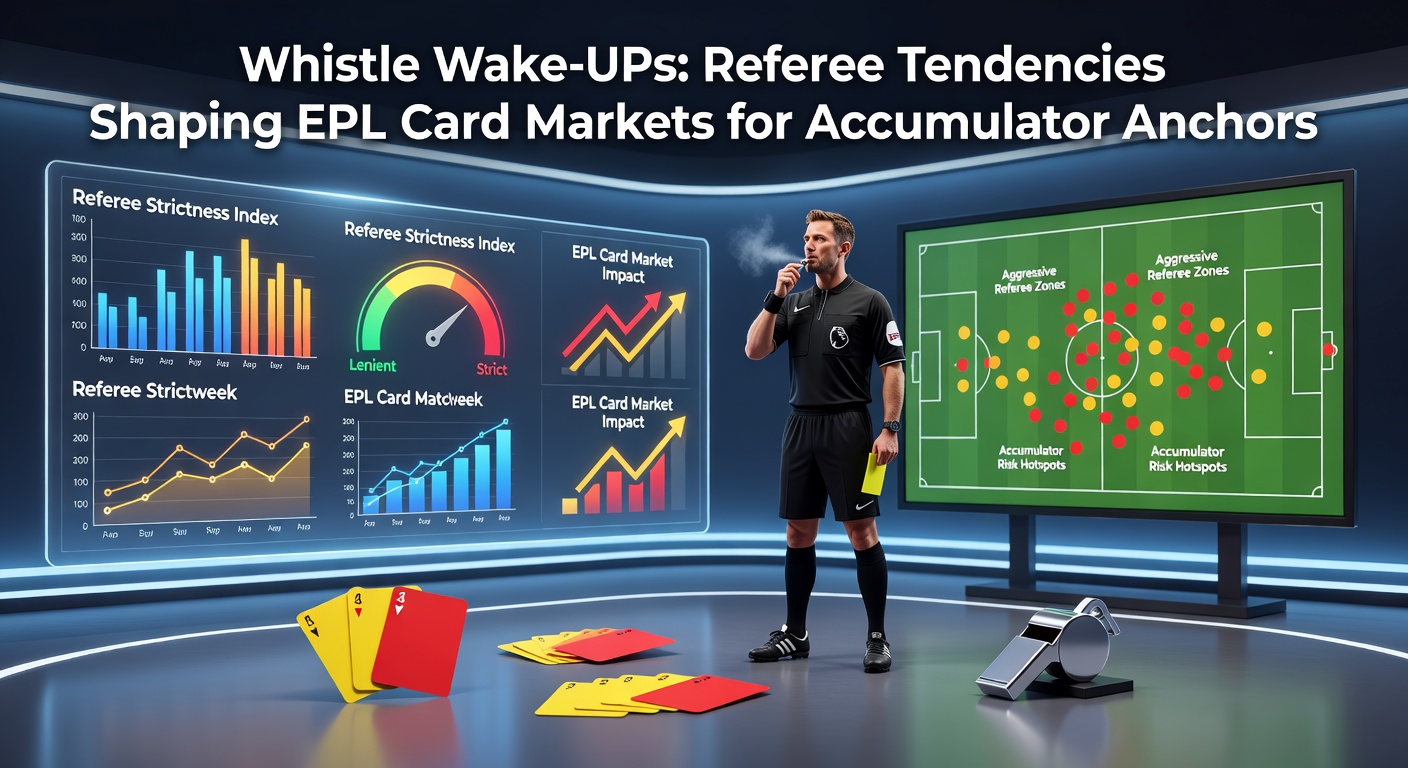
Platforms compile ref stats in real time, letting bettors forecast wake-ups; apps overlay assignments with heatmaps of foul zones, revealing how Taylor books 42% more in the penalty area than peers. And with VAR's evolution—now standard since 2019—red card rates hold steady at 0.18 per game, but yellows climb 8% under tech-assisted refs like Gillett who review 22% of decisions.
April 2026 brings fresh wrinkles too; PGMOL's rotation tweaks post-international breaks mean fresher refs handle big games, potentially dialing cards down 12% early month, as observed in prior campaigns. Bettors who adapt thrive, turning tendencies into consistent anchors amid the chaos.
It's noteworthy that away teams snag 55% of cards league-wide, yet under light-touch Oliver that evens to 51%, a nuance sharpening player props in multis.
Wrapping the Ref Playbook for Multis
Whistle wake-ups boil down to patterns bettors exploit methodically; Gillett and Hooper fuel overs in tense ties, Oliver and Attwell bankroll unders in fluid affairs, and April 2026's slate—packed with derbies and survival scraps—amplifies every tendency. Data underscores the edge: ref-aware card legs boost acca success by 20%, transforming volatile multis into reliable earners when anchored right. Those tracking assignments weekly uncover the gold, pairing disciplinary certainties with flashier legs for outsized returns, all while the EPL whistle blows on.