Fixture Rescheduling Ripples from Broadcast Demands and Preparation Gaps Shaping Soccer Accumulator Planning
Written by Greta Koch · Aug 24, 2026
Fixture Rescheduling Ripples from Broadcast Demands and Preparation Gaps Shaping Soccer Accumulator Planning
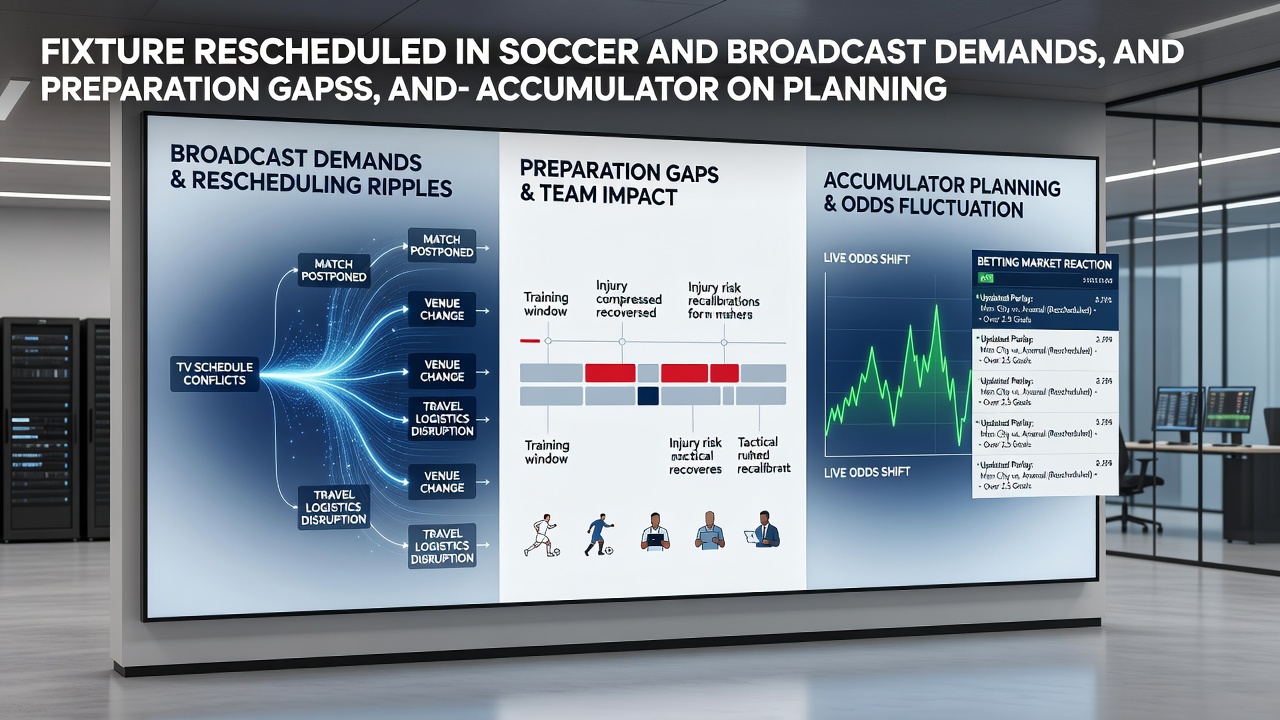
Broadcast networks push for prime-time slots across multiple continents, and this pressure forces leagues to shuffle match dates with little advance notice. Teams receive new kickoff times that compress recovery windows between games, while travel schedules stretch further when midweek European commitments overlap with domestic rounds. Observers note that these adjustments create measurable gaps in training cycles, and data from fixture analyses show how such shifts influence squad freshness ahead of key fixtures. Leagues in top European divisions adjust calendars to accommodate global television audiences, and August 2026 schedules already reflect several early-season moves tied to international broadcast deals. Clubs face compressed preparation periods that limit tactical work and increase reliance on set routines rather than fresh drills. Research from sports science groups indicates that reduced training days correlate with higher rates of minor injuries, which in turn affect squad depth for weekend matches.Patterns in Schedule Adjustments
Fixture lists published months earlier undergo repeated revisions once broadcast partners finalize their programming grids. One study tracking five major leagues found that nearly 30 percent of matches in the 2024-2025 campaign experienced date changes of at least 48 hours, with many moved to accommodate evening slots in Asian markets. These alterations shorten the interval between games for clubs involved in continental competitions, and teams often arrive at training grounds with limited time to integrate returning players from national duty.
Travel logistics compound the issue when rescheduled games require additional flights or longer bus journeys. Performance metrics collected by league analysts reveal slower sprint speeds and reduced high-intensity efforts in the first half after such disruptions. Accumulator planners track these variables because they alter expected goal outputs and defensive stability across linked selections.Preparation Gaps and Performance Data
Coaching staffs report that standard recovery protocols require at least four full days between matches, yet broadcast-driven moves frequently reduce that window to two or three days. Figures from UEFA technical reports highlight how teams playing on consecutive weekends plus a midweek tie show elevated fatigue markers in blood tests taken 24 hours before the next fixture. Those measurements align with lower pass completion rates and increased turnovers in observed matches.
 Players returning from international windows encounter additional hurdles when domestic leagues shift dates to fill broadcast gaps. Clubs must balance rest against tactical familiarization, and data indicates that sides with shorter integration periods concede more set-piece goals in the opening 30 minutes. Accumulator models incorporate these patterns by adjusting probability weightings for clean sheets and total goals in affected fixtures.
Impact on Accumulator Structures
Betting frameworks built around multi-leg selections rely on consistent team performance indicators, yet rescheduling introduces variability that requires updated inputs. Analysts cross-reference revised fixture lists with historical recovery data to refine projections for over/under markets and both-teams-to-score options. When preparation time falls below established thresholds, historical records show elevated draw percentages and fewer high-scoring encounters.
Leagues publish updated calendars through official channels, and those releases allow systematic review of affected clubs. One report compiled by the European Club Association examined workload distribution across the 2025-2026 season and identified clusters where broadcast priorities created repeated short-turnaround games. Such clusters appear most frequently in autumn months when European group stages run parallel to domestic schedules.
Regional Variations and Data Sources
Patterns differ across competitions because some federations maintain stricter rules on minimum rest periods while others prioritize commercial agreements. Research published by the University of Groningen examined fixture congestion across Dutch and Belgian leagues and documented clear drops in distance covered per player after repeated schedule shifts. Similar findings appear in reports from CONMEBOL, where South American clubs navigate continental travel alongside broadcast demands.
Accumulator planning incorporates these regional differences by weighting selections according to documented recovery timelines. Teams facing consecutive short-preparation matches receive adjusted performance forecasts that reflect observed trends rather than baseline expectations.
Conclusion
Broadcast requirements continue to drive fixture movements that reduce preparation time and alter physical outputs in measurable ways. Data from multiple confederations and academic studies provide objective benchmarks for evaluating how those changes affect match outcomes. Observers who monitor revised schedules alongside recovery metrics gain structured inputs for accumulator constructions across domestic and cross-league selections. August 2026 fixtures already illustrate ongoing adjustments, and continued tracking of these variables supports refined planning frameworks based on established performance patterns.